No More Trust Us: How Smart Contracts Are Putting the 'Fair' Back in Online Sports Betting
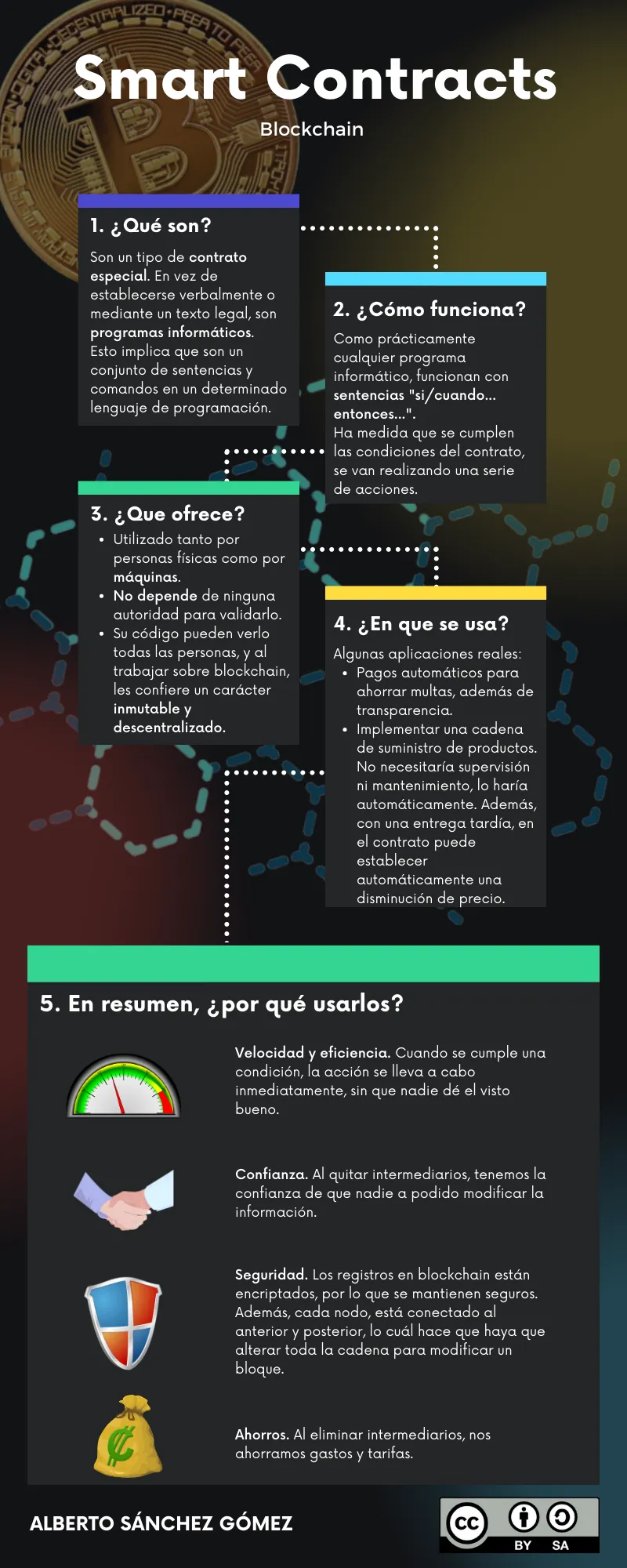
Photo: Albeertoo, CC BY-SA 4.0, via Wikimedia Commons
Imagine walking into a casino where every dealer's hand, every spin of the roulette wheel, and every payout calculation happened on a giant screen visible to anyone in the building — and every single transaction was permanently recorded in a public ledger that nobody could alter. That's not a hypothetical. In the world of blockchain-based sports betting, it's increasingly the standard. And it's flipping the power dynamic between bettors and platforms in ways that would've seemed impossible five years ago.
We're talking about smart contracts, and if you haven't dug into what they actually do for the betting experience, now's a good time to start.
The Black Box Problem with Traditional Sportsbooks
Here's something most bettors never think about: when you place a wager on a traditional online sportsbook, you have absolutely no way to verify how the odds were calculated, how your payout was processed, or whether the platform's internal systems are operating exactly as advertised. You're taking it on faith.
That's not necessarily malicious — most regulated US sportsbooks operate legitimately. But "regulated" doesn't mean "transparent." The algorithms that set lines, grade bets, and process withdrawals are proprietary black boxes. Third-party auditors peek inside occasionally, but those audits are infrequent, not real-time, and the results aren't always public. When disputes arise, the house has all the information and you have almost none.
This is the black box problem, and it's been baked into online gambling since the beginning. Smart contracts are the first technology that genuinely solves it.
So What Exactly Is a Smart Contract?
Strip away the jargon and a smart contract is pretty straightforward: it's a self-executing program that lives on a blockchain. You define the rules upfront — "if Team A wins, pay out X to wallet Y" — and once those conditions are met, the contract executes automatically. No human intervention. No possibility of the house deciding to "review" your winning bet before paying. The code runs, the outcome is verified, the funds move.
Because the contract lives on a public blockchain like Ethereum, anyone can read its code. You don't have to trust the platform's word that your bet will be honored — you can literally inspect the logic yourself (or hire someone to do it) before you wager a single satoshi. That's a fundamentally different relationship between bettor and platform than anything traditional sports betting has ever offered.
Provably Fair: The Concept That's Reshaping Expectations
The phrase you'll hear a lot in crypto betting circles is "provably fair." It refers to a cryptographic verification system where the outcome of any bet can be independently confirmed as unmanipulated after the fact.
Here's a simplified version of how it works in practice: Before a bet resolves, the platform generates a "server seed" — a random string of data — and gives you a hashed (encrypted) version of it. You also contribute a "client seed" from your end. The outcome of the bet is determined by combining these seeds. After the bet settles, the platform reveals the original server seed, and you can independently verify that the outcome was generated fairly using both seeds together.
This means the platform cannot change the outcome after the fact, because the hash of the server seed was already committed before you bet. And you can verify it yourself. That's provably fair — not "trust us fair," not "audited fair," but mathematically demonstrable fair.
For sports betting specifically, smart contracts take this further by tying wager logic directly to verified oracle data — real-world sports results fed into the blockchain through trusted data providers. When the final whistle blows, the oracle updates the contract, the contract checks the result against your bet terms, and the payout executes. Automatically. Instantly.
Real-World Examples Worth Knowing
Several platforms have already demonstrated how this works at scale. Augur, one of the earliest decentralized prediction markets, showed that sports and event outcomes could be wagered on through smart contracts without a central operator controlling results. Its model had rough edges, but it proved the concept.
More recently, platforms built on Polygon and Arbitrum (faster, cheaper Ethereum-compatible chains) have launched sports betting interfaces where the entire wagering logic is on-chain and auditable. Users can see exactly how parlay payouts are calculated, how juice is factored in, and how edge cases like postponed games or disputed outcomes are handled — all before placing a bet.
Compare that to the experience of calling customer service at a traditional sportsbook to dispute a graded bet. The contrast is stark.
Why This Matters Specifically for American Bettors
US sports bettors have a complicated relationship with online gambling platforms. The patchwork of state regulations means many Americans have historically used offshore books that operated with minimal oversight. Trust was always a gamble in itself — you were hoping the platform would pay out, but you had limited legal recourse if they didn't.
Smart contracts eliminate that dependency. When the payout logic is embedded in immutable code on a public blockchain, the platform can't stiff you, even if they wanted to. The contract pays you because that's what the code does. There's no "pending review," no account suspension right before a big withdrawal, no sudden policy change that conveniently voids your winning bet.
For American bettors who've been burned by shady offshore books — or who've simply grown tired of wondering whether the platform is playing straight — that's not a minor improvement. It's a paradigm shift.
The Transparency Dividend
There's a broader cultural dimension here too. Younger American bettors, particularly those who came of age during the rise of DeFi and Web3, have a fundamentally different baseline expectation around transparency. They're used to being able to audit the protocols they interact with. They're skeptical of closed systems and comfortable with open-source code.
Bringing that sensibility to sports betting is producing a generational shift in what bettors consider acceptable. "Just trust us" isn't a sufficient answer anymore when the alternative — verifiable, on-chain logic — actually exists.
At GoBetVN, we see smart contract betting not as a niche tech experiment but as the direction the whole industry is heading. The platforms that embrace transparency now will earn the trust of the next generation of bettors. The ones that don't will find themselves defending black boxes to an audience that's already moved on.
The math doesn't lie. Neither does the blockchain.